Wildberries

About Wildberries
Widlberries is designed by Marceline Leiman and published by Allplay. This family friendly light strategy game has players competing to make the most awesome-est breakfast ever by cleverly choosing cereal pieces.
Each cereal piece type is represented by a marble. On your turn you take 1 or 2 marbles from the bottom of one of the four marbles tracks, causing the rest of the marbles to roll down, affecting the following player's choices. Empty marble tracks are refilled several times per game. Manipulating marble tracks to set yourself up for the best marbles and denying good choices for your opponent are a key part of the game's strategy. Each cereal type scores in a different way, and not all cereal is good (looking at you Sour Berries!).
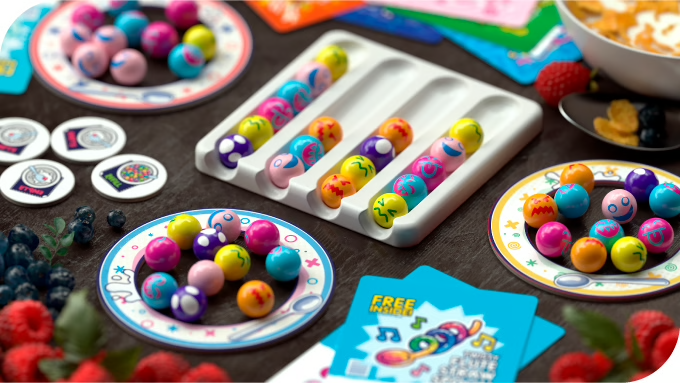
After all refill tokens have been used, the game ends. Each player totals the points earned from the marbles in their cereal bowl, as well as any prizes they claimed during the game by meeting specific cereal requirements. The player with the most points wins!
Project Overview:
Brieger Creative was hired to take the Wildberries prototype submitted by the designer, Marceline Leiman to a finished gameplay product.
The core gameplay submitted was already solid and fun. The basic rules of how players collected marbles and scored marbles were already in place and worked well. This was a simple game, though there is always room for improvement and to make a game shine. Much of our work was focused on refining existing content and providing more fun stuff. Changes the dev team made included:
- General Math and Distribution: Adjusted the number of marble tracks and marbles used per track, total number of marbles, marbles per Berry set, and number of Berry sets used. Balanced Berry card point scoring to be more engaging, fair, and more varied.
- Player Scaling: Added a 5th player, introduced gameplay setup changes based on player count.
- Content Creation: Refined and developed new Berry cards. Each Berry set was created with a loose identity, such as a set that compares to each other player and a set that is situationally good based on the number of marbles you have. Since each game uses one card per Berry set, this ensured the cards worked great in any combination and were not repetitive.
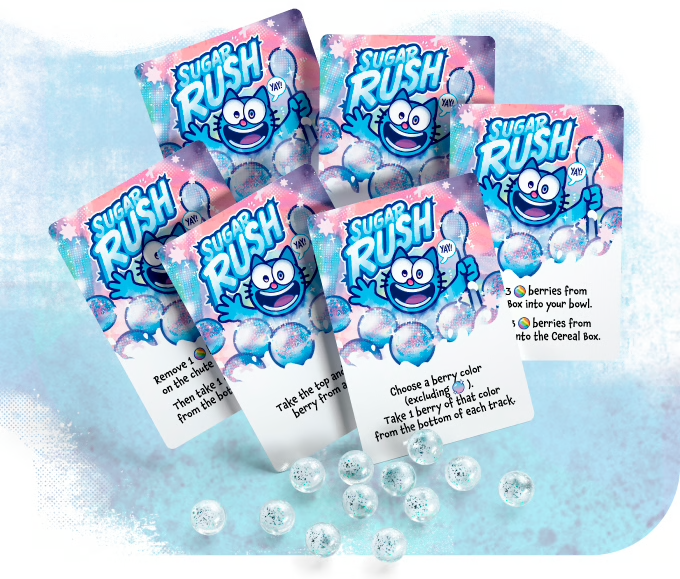
The development team also designed and developed the Sugar Rush expansion, which has players collecting special Sugar Rush marbles to use for powerful abilities.
Services Provided:
- Gameplay Development
- Content Design
- Playtest Coordination and Analysis
- Expansion Design
Case Study: Increasing Depth in a Light Game
Wildberries was designed and developed to be purposely simple and approachable. It can be taught in a minute and often played in 15. A player has limited choices on their turn that can all be seen at a glance. Yet, even for the more casual audience, the dev team was noticing the game seemed a little lacking.
When Brieger Creative works on games we often cut and streamline, yet we almost always add something new too. Something else the player can do or engage with, creating more meaningful decisions and different ways to approach each game. Good development often starts with clearly identifying problems, and here our problem was that play was too straightforward. There was often a best play identified by the player each turn. Worded another way - how do we make the player change the marbles they would normally be very encouraged to take on their turn?
We initially explored a lot of things, including having a spatial puzzle in the player's cereal bowl where marbles would be arranged for scoring or having resources the player could accumulate to spend on extra powers. We didn't know if we'd be willing to ship with these, yet exploring different options teaches us more about the game and eventually leads to the right solution. It is easy to go overboard with complexity, with the general rule being to remove complexity rather than add it in.
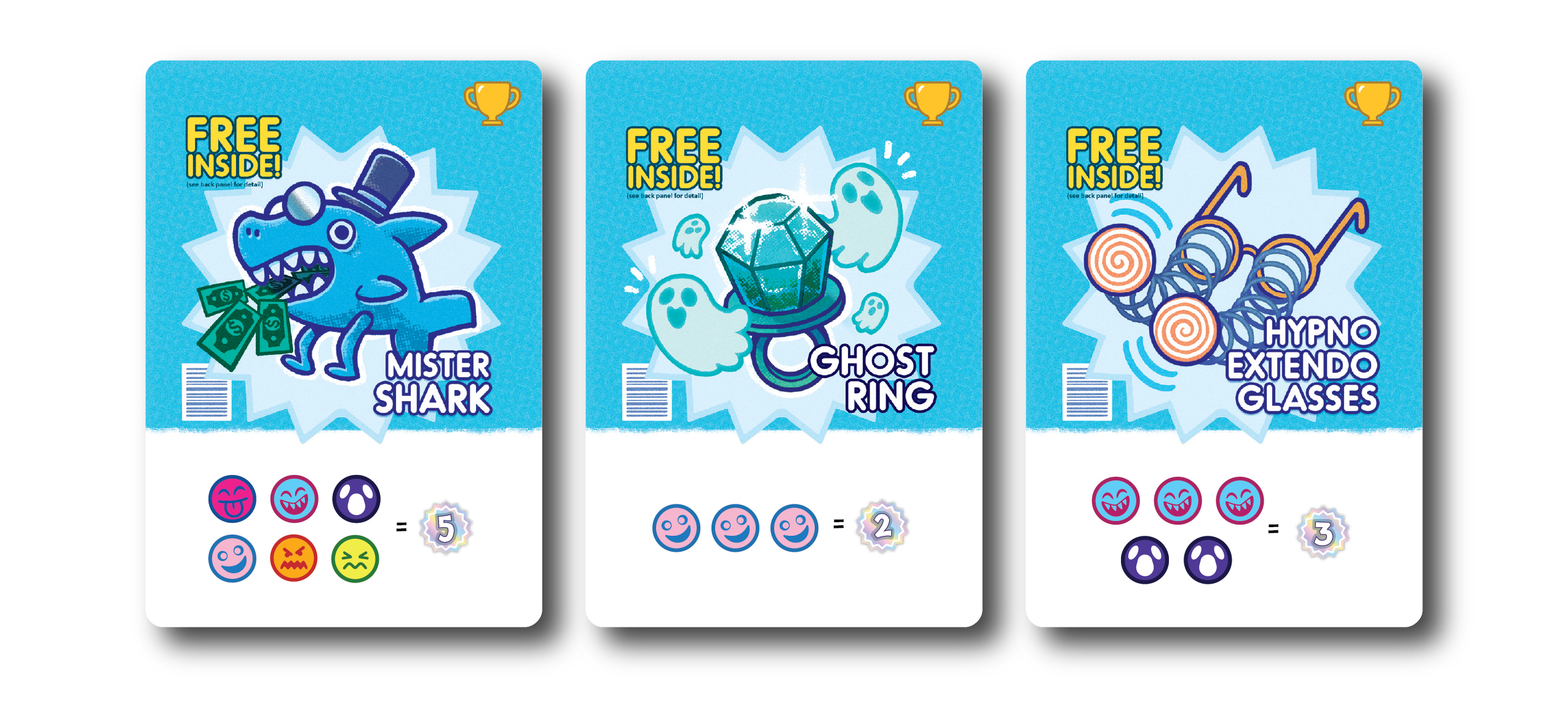
In the end we landed with the concept of Prizes. Each game starts with 5 prize cards laid out. Each prize has a point value and a marble requirement, such as 2 Black marbles and 2 Blue marbles. At the end of a player's turn, the player claims a prize if the marble requirement appears in their cereal bowl, scoring the prize's points at the end of the game. The concept of prizes was easy to understand, yet they did so much for the game.
A player now had a meaningful decision of playing a turn that would be worse for their regular scoring but could help them towards securing more points from a prize. At the same time, a player wanted to actively deny setting up marble tracks for their opponents to get marbles for prizes. A winning strategy often meant scoring well from cereal points and prizes, yet it was possible to win just by focusing on either.
Adding complexity doesn't have to mean a massive core change or adding a major new system. Sometimes a rules light tweak or content addition is enough to get the engagement a game needs. Our additional development, like increasing the number of Berry sets used per game and more varied Berry content further added interesting decisions while maintaining the product guideline of a simple approachable game.
Brieger Creative Team
- Velgus
- Collette Quach