Things on Strings
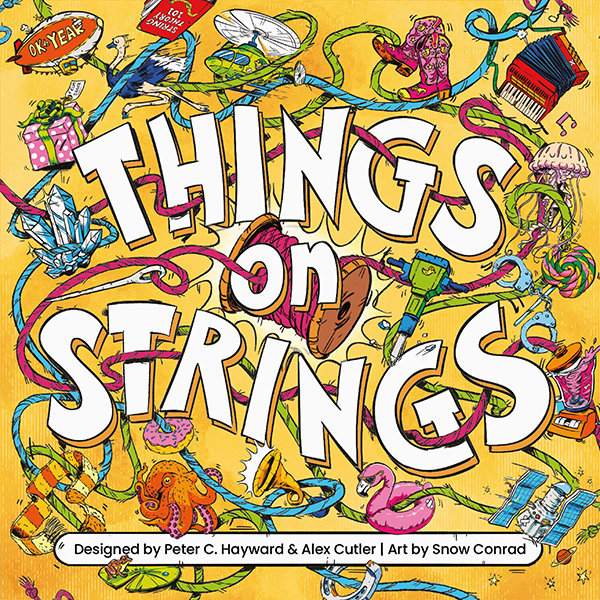
About Things on Strings
This is a sequel to Allplay's hit Venn Diagram-making game Things in Rings, but this time, players cooperatively build a flowchart! Players on one side of the table — the Finders — logically compare, contrast, and categorize Thing cards, while one player takes the role of the Knower and formulates the rules by which the flowchart splits and grows.
The Thing Cards and customizable dry erase rules are also compatible with Things in Rings and its expansions.
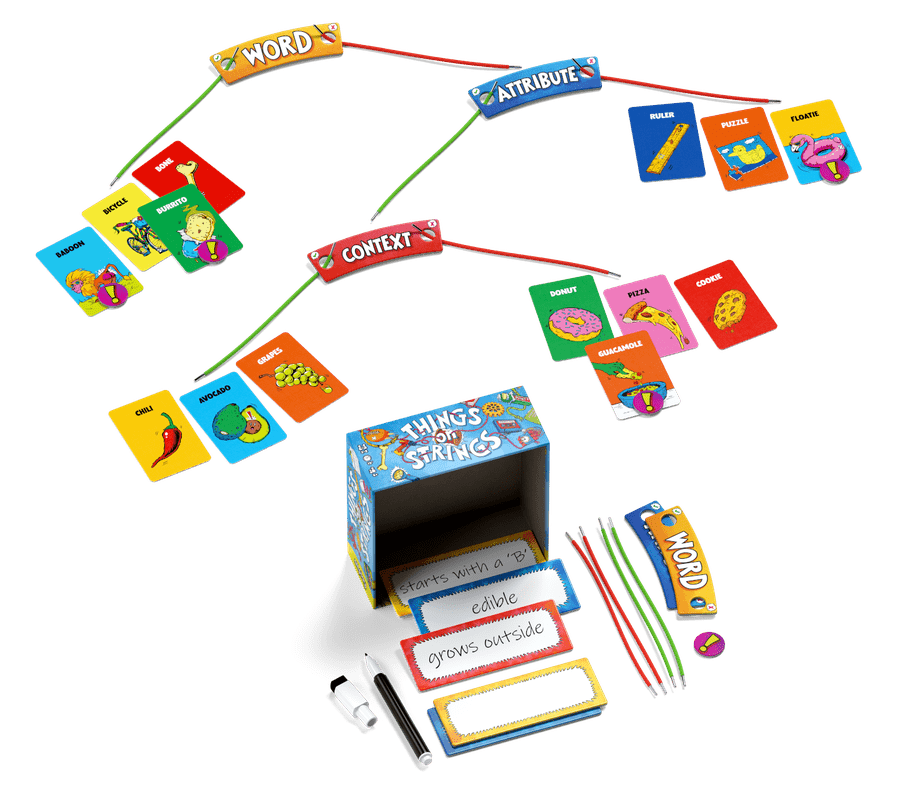
Project Overview:
Our work was focused on three key aspects:
- Streamlining the learning process
- Creating + Refining the Things list
- Improving the Finders' feeling of participation
Things on Strings is both its own game and an expansion to Things in Rings. Working alongside co-designer Peter C. Hayward, we refined what was already a pretty locked-in design. Rather than iterate on the core system or product vision, we zeroed in on content and learnability, making sure players could navigate this novel system and seamlessly integrate its content with the other Things SKUs.
Services Provided:
- Game Development
- Content Design
- Playtest Coordination and Analysis
Development Diary
Development on a mature design like Things on Strings is often about really digging in and elevating small parts of the game to help it shine.
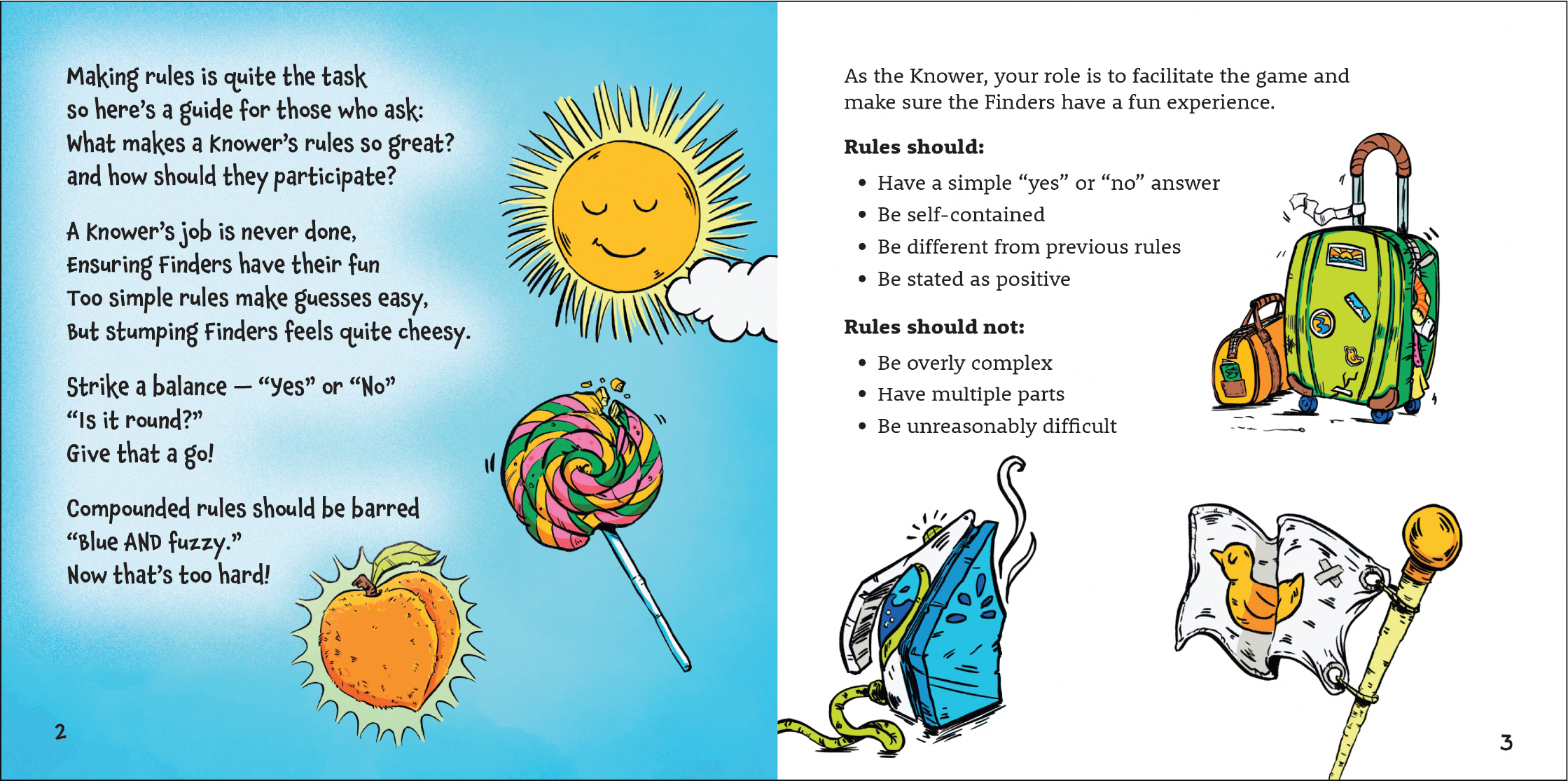
Streamlining the learning process was important due to the game's asymmetry being significantly higher than in Things in Rings. In Rings, the Knower's role is more passive and almost procedural, deciding how to interpret the Finders' choices and place their cards in the correct spots. Here, the Knower's role expands to creating rules on top of splitting Things into categories, both of which can be quite challenging.
So we developed The Knower Knows guide. This guide takes the form of a small Suess-inspired rulebook, just for the Finder. Through rhyming poems, a continuing motif in these games, it teaches the Knower player proper rulemaking, with examples, and serves as reference material for them through the game.
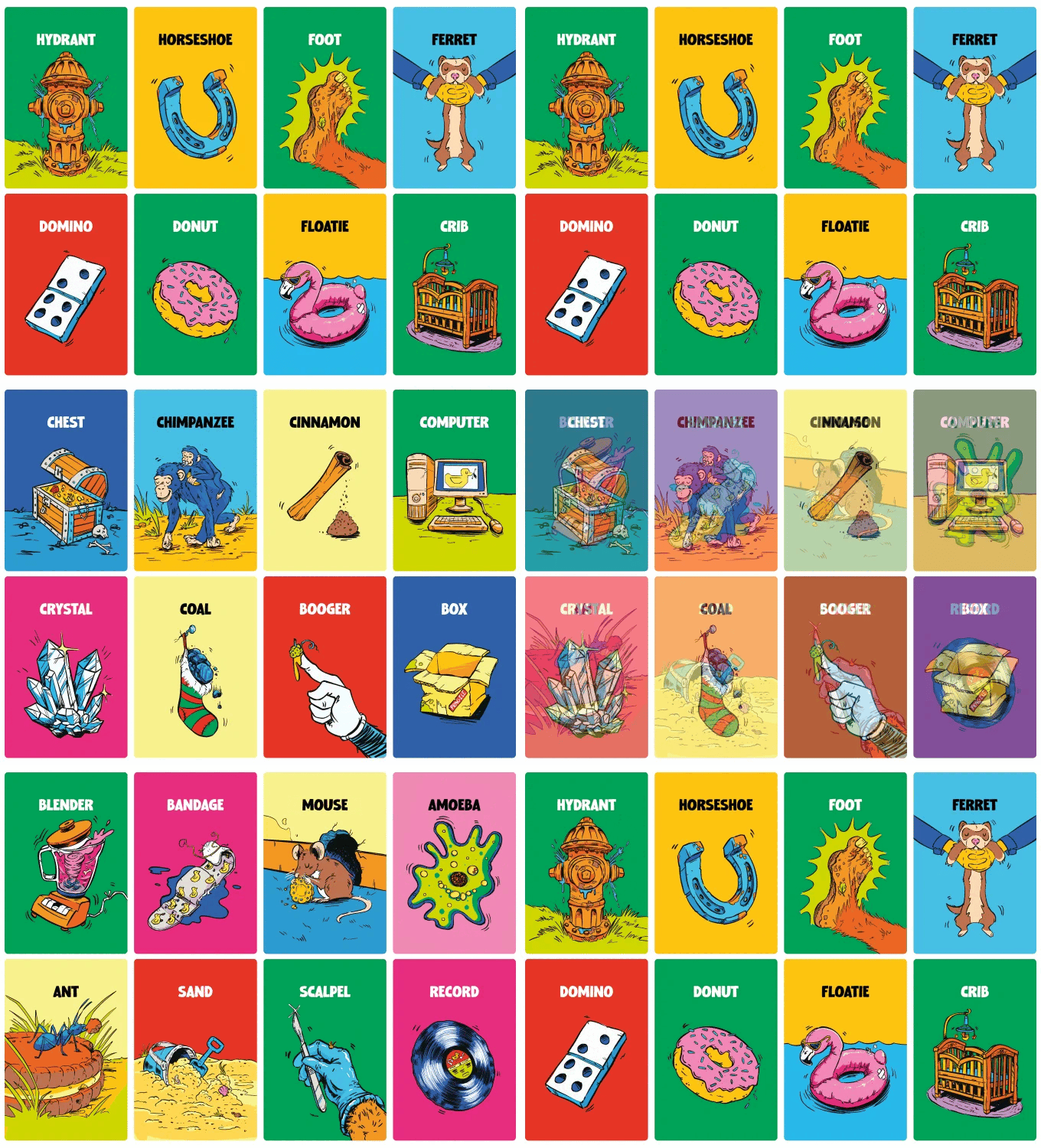
Things on Strings also features 200 new and unique Thing cards, completely compatible with other Things games and expansions. When developing this word list, we had to consider the various Rules cards that existed in Things in Rings, while also considering their utility in this new game. Internally we track the total percentage of Things that each Rule from previous SKUs is relevant to, eg "has two vowels", "contains liquid", etc, and made sure a plurality of new cards interacted with those.
In this game, where rules are made up, there tends to be many recurring, low-hanging fruit rules like "is alive" and "has X syllables." Thus, throughout development we expanded the number of living things, increased the variety of words, and got more creative with size and physical composition, thus moving away from having 200 knickknacks like screws, rocks, buttons, etc. We made sure nearly every Thing could have numerous descriptors and rules interactions, and be fun for either side of the table to consider.
Some examples of Thing evolutions:
- Tray -> Guacamole
- Paperclip -> Lightning
- Gravel -> Toucan
Lastly, we introduced more decision-making to the Finders. Effectively, the Finders are playing Family Feud each turn, with a group huddling together and deciding which one Thing they're going to place onto the Knower's flowchart. At the start of dev, the Finders would have one Thing each turn and choose where it goes, and we moved to each Finder having a Thing card they held, refilling their hands only once all players had placed their cards. This accomplishes two key things:
- Increases the amount of discussion points for the Finders - now it's "which Thing do we choose, and where do we put it" versus "where do we put this Thing". It also adds a dimension of estimating confidence to the discussion, because you can hold off on a placement to gain more information and place it later.
- Gives each Finder a feeling of unique contribution and ownership: they have a Thing that is theirs, which they can independently hold and think about apart from the group.
Conclusion
Things on Strings is a great example of our team improving a game without changing much about the game's core system. Refining the rules, its content, and how the game is presented are as critically important as the game itself.
— Breeze Grigas, Lead Developer
Brieger Creative Team
- Breeze Grigas
- John Brieger
- Bryan "Duckie" Lue