Tearable Quest
About Tearable Quest
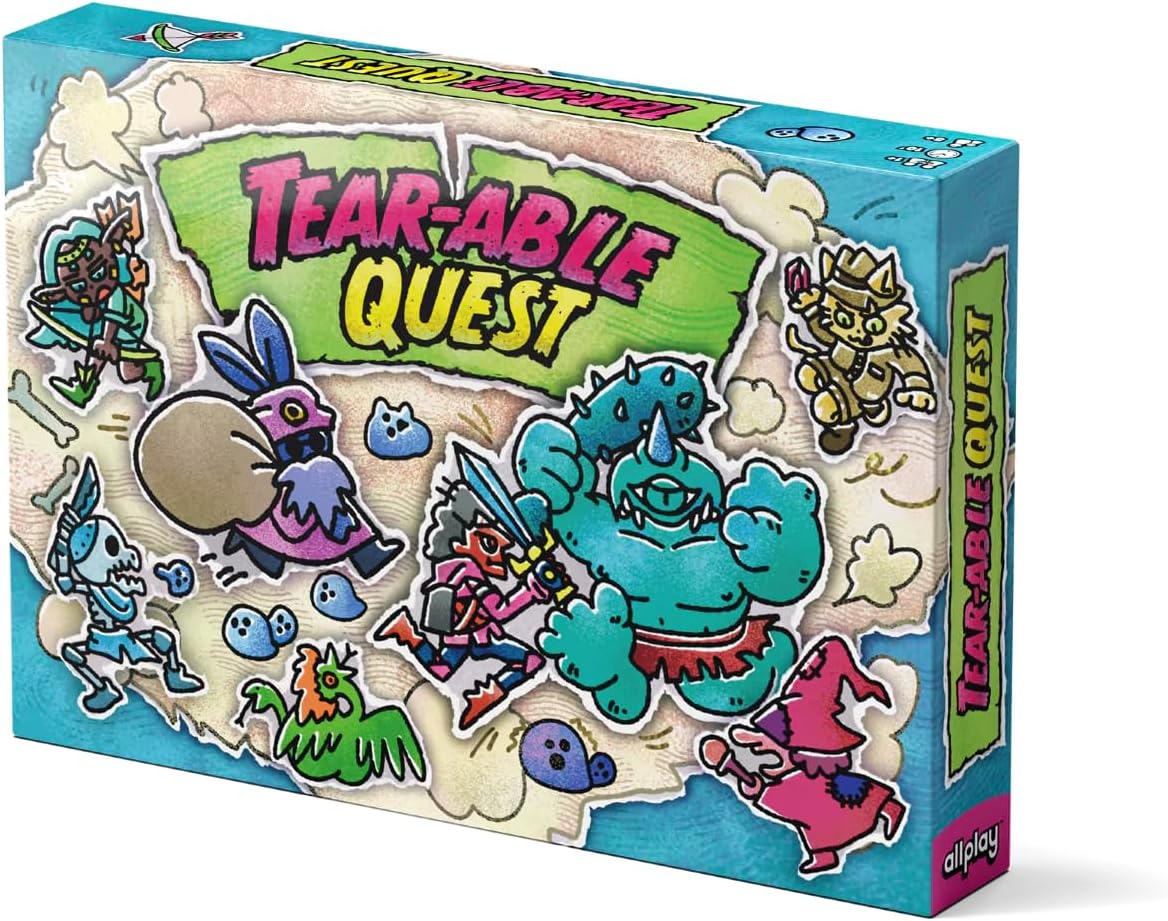
Tearable Quest, designed by Shintaro Ono and published by Allplay, is a fast-paced casual game where players strategically tear paper to complete quests.
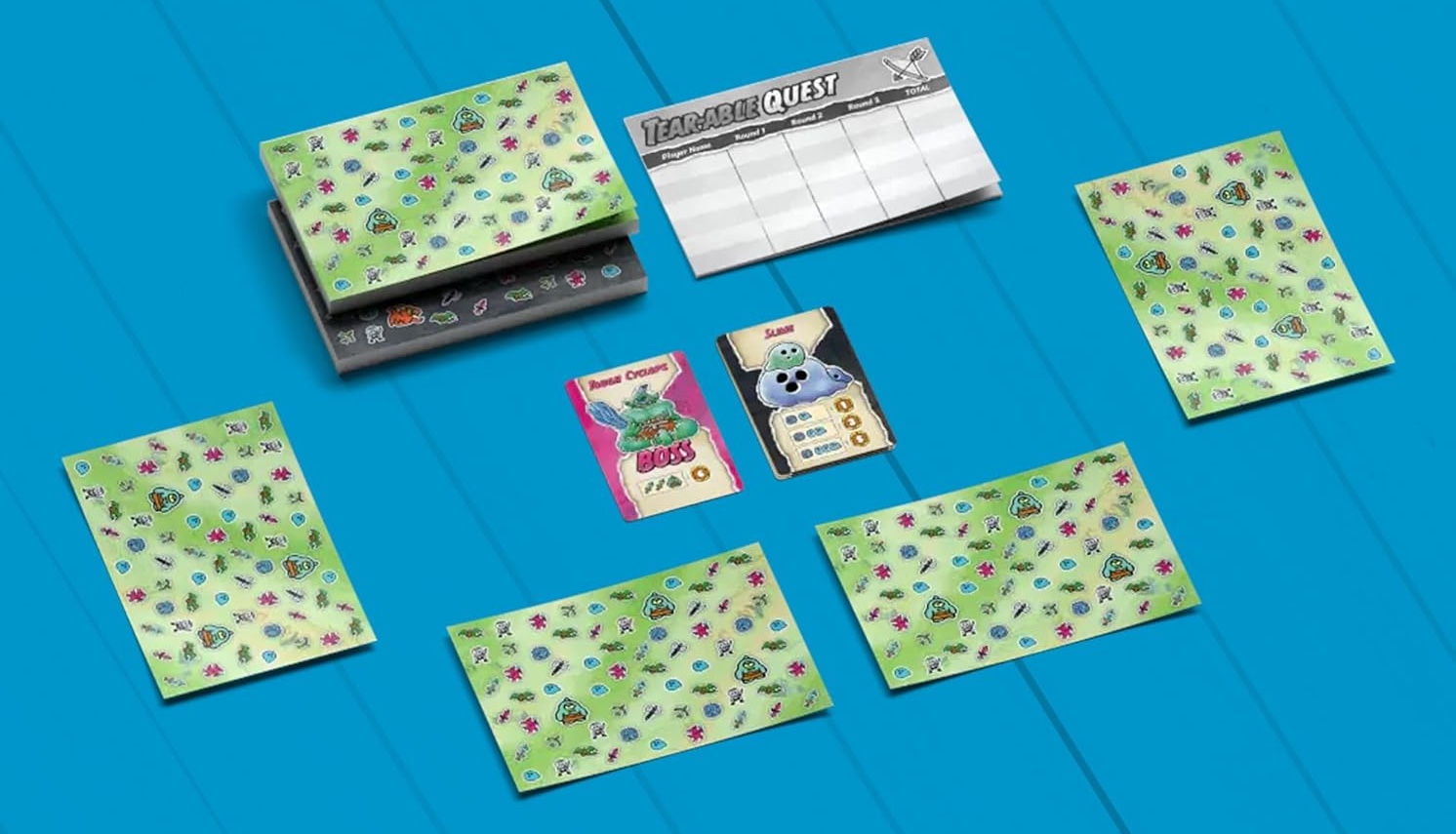
A game starts with players selecting which of the two stages to play, Manic Meadows or the Dragon's Den. Each player is given a single sheet of that stage which they will tear from the whole game. On front of a sheet is a variety of dastardly monsters and weapons, and on back are bonus treasure chests, coins, and curses. A boss monster quest is selected and put out to apply for the whole game.
Each round, a new standard quest is revealed and a 2-minute timer is set. In real time, players carefully tear pieces from their sheets to complete quests by tearing off the exact icons shown on the quest card (and no extras). For example, 3 Skeletons and 1 Axe, or 2 Magic Swords and 1 Cyclops Boss. Score more points by completing higher levels of a quest, the same quest multiple times, and getting bonus icons on the back of your torn out pieces.
Project Overview:
Tearable Quest is a game of silly fast-paced fun centered around tearing paper quickly and carefully. Brieger Creative's development focused on keeping the game accessible, clear, and speedy.
Rules for tearing pieces were clarified and a bit simplified, which were tricky to originally teach.
The round structure changed in several ways. Rounds were decreased from 4 to 3, to make each one more meaningful and allow the player enough choices in the last round. The boss monster quest (which is the most interesting and highest scoring), was made to be available across the whole game rather than in a shuffled deck where it may not even appear. This was more engaging, let players plan around it, and gave players additional choices balancing each round's standard quest and the always available boss quest. To avoid perfect planning and add more risk and surprise, standard monster cards were revealed one at a time instead of all at once.
Additionally, we created new content in the form of 4 additional boss quests.
Services Provided:
- Gameplay Development
- Content Design
- Playtest Coordination and Analysis
Case Study: Adding Replayability Without Components
While Tearable Quest's main appeal is its novelty and low price point, one concern from players and potential customers is often replayability. They would want a game to feel different each play, and sometimes prefer to play specific variations they like best.
This proved to be quite tricky to figure out how to implement. We weren't allowed to create new stage cards, and art additions and changes had to be minimal. The amount of components in the game box was essentially at its limit for box space and manufacturing cost. Gameplay had to remain simple, with setup just as quick.
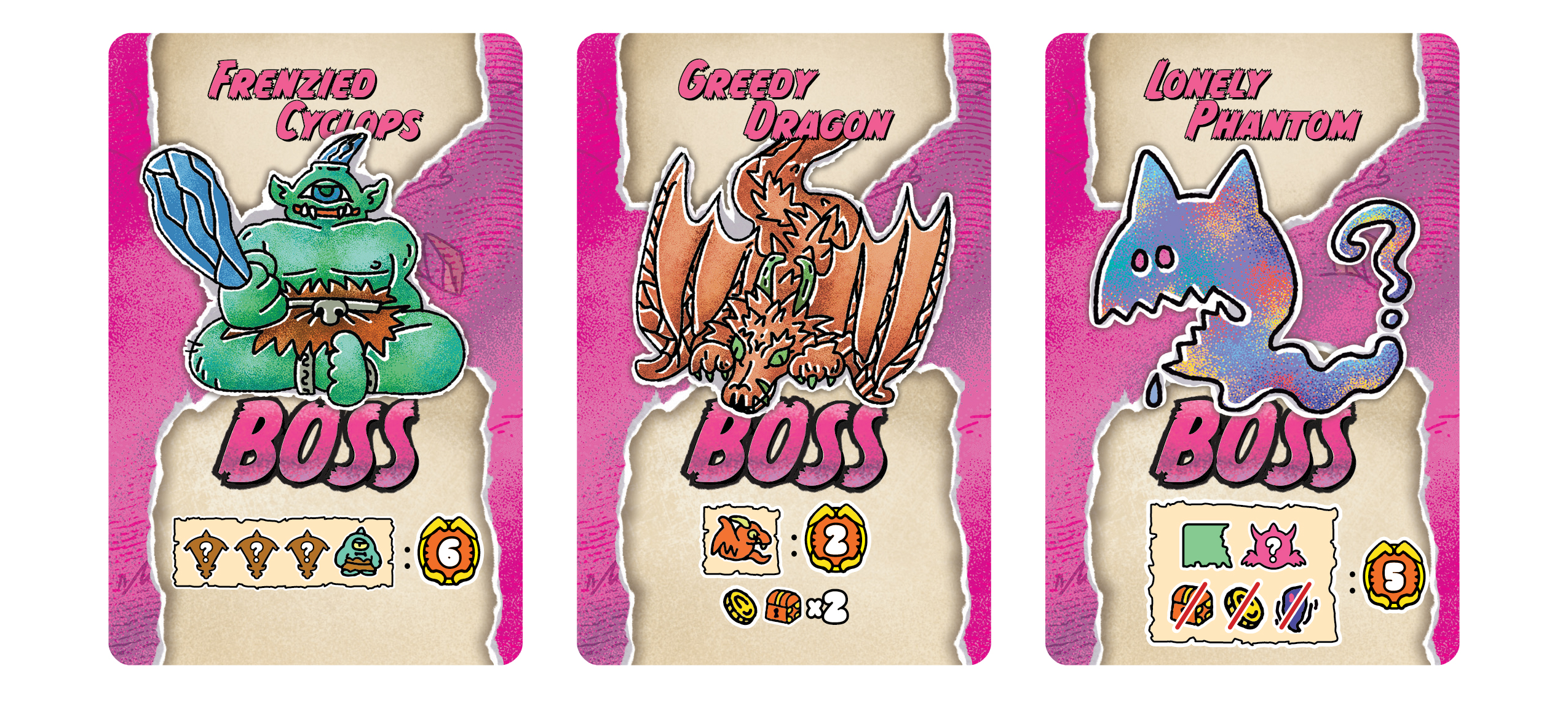
Lead developer Velgus's solution was to add more boss quests. Boss quests were already the most interesting in the game, and with our development changes there was always one in play so we could craft the game experience around that.
The current bosses of cyclops and dragon were already printed on the different stage cards. We couldn't replace those stage cards, so doing something like swapping the dragon icons for new goblin boss icons wouldn't work or make sense, but we realized we could use the same existing boss icons in a different way. We created an alternate version of each boss, yet with very different play styles. We also created two versions of a new Phantom boss. The phantom is an evil spirit, so it could be thematically justified to take the place of any existing boss icon via possession. The phantom could thus be played on any stage, giving more replayability for this game and being additional content that could work in potential future editions to the series. Bosses were put on double-sided cards to reduce the number of cards and keep things organized.
With some clever design, we expanded the game from 2 unique game experiences to 6 by only adding one piece of art and one card, greatly increasing the product's value proposition.
Brieger Creative Team
- Velgus
- Michael Dunsmore